Written by: Evangelical Focus
Article source: evangelicalfocus.com
At least 100 evangelical pastors have died in Bolivia because of the Covid-19 virus, two evangelical organisations in the country said.
The majority would have been infected as they served in streets, health centres and prison facilities.
The President of the National Christian Council of Bolivia, pastor Luis Aruquipa Carlo, said: “We have a report about around 40 pastors in the Eastern region and around 60 in the Western region who have all died (due to the coronavirus)”.
Other leaders of evangelical churches are in hospitals. “In these moments, we have leaders fighting hard for their lives against the coronavirus in our congregations”, he added.
Christians continue to reach those in need
The Vice-President of the Association of Christian Churches of the city of Santa Cruz, Belfort Guthrie, said that between 6 April and 7 July, they had learned of 38 deaths due to coronavirus among pastors only in that regional department.
Most of these infections happened “as they assisted people who could not do their shopping, collecting food, and helping to provide ‘common pots’”, said Guthrie.
He insisted that the infections happened despite following the security procedures. “The deceased pastors unfortunately had background illnesses such as ‘chagas’, diabetes and other symptomatologies”, he explained.

Chuch buildings ready to be used as health centres
The premises of several evangelical churches have been offered to the authorities to be converted into health centres, explained the President of the National Christian Council of Bolivia. “We’re opening our worship centres because health centres have collapsed”.
Church buildings in Villa Fátima (La Paz) and El Alto were cited as examples of churches that were “ready” to be used.
Evangelicals are seeking to actively collaborate with the Governour of La Paz, as well as city councils, and neighbours associations to find solutions. “And we continue to preach justly in the communities, in the streets. We continue to visit the sick, those who are deprived of freedom, and we do so following the security measures”.
Challenging crisis requires prayer, says doctor
On 21 July, the government of Bolivia had officially reported 2,218 deaths due to coronavirus and 60,991 Covid-19 infections – the real figures could be higher. President Jeanine Áñez confirmed she had also been infected with the virus.
Vicente, a medical doctor of evangelical faith in La Paz, told Evangelical Focus: “Many of the health professionals are testing positive, and some have died”.
“The warm regions of Bolivia are those who are suffering most. And the distant and poor regions are suffering as well. The quarantine allows half of the population to go out every other day, and in some regions we have returned to rigid quarantines”.
For Vicente, faith and work as a doctor are closely linked. “We continue to receive patients and to be on call in the hospital, praying for our co-workers and bringing the Word of God to our patients”.
He asks to “pray that the infections do not grow exponentially, that we may contain the number of those who are ill, that the number of health workers infected descends, and that their evolution is not lethal”.
Vicente adds: “Especially, pray that we may come closer to the Lord, that we may know Him more and that we may be ready to go to His presence, if he calls us”.
Click here to KEEP UPDATED on the latest news by subscribing to our FREE weekly newsletter.
Date published: 21/07/2020
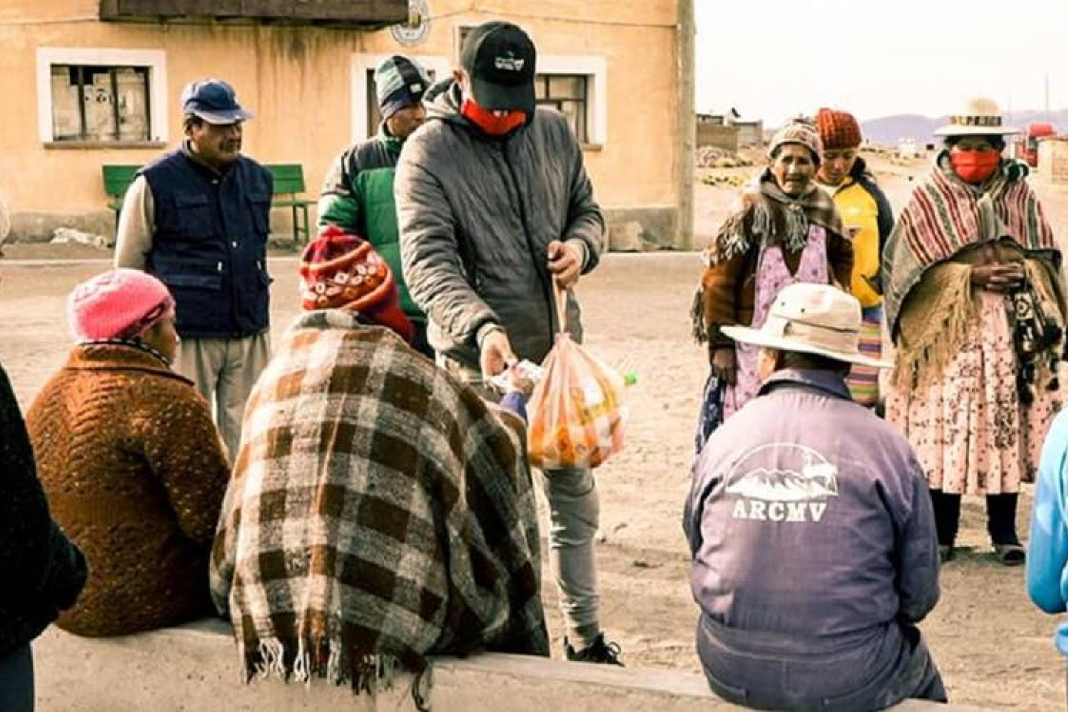
Feature image: Humanitarian help distributed by a Christian organisation in a rural area of Bolivia, May 2020. / MedFund Bolivia
DISCLAIMER
JOY! News is a Christian news portal that shares pre-published articles by writers around the world. Each article is sourced and linked to the origin, and each article is credited with the author’s name. Although we do publish many articles that have been written in-house by JOY! journalists, we do not exclusively create our own content. Any views or opinions presented on this website are solely those of the author and do not necessarily represent those of the company.