Written by: Tang Zhe
Article source: bitterwinter.org
As the campaign “to eradicate pornography and illegal publications” sweeps across the country, religious materials not approved by the Communist Party are seized.
On December 7 last year, the police raided a House Church
See House Churches.
“>house church meeting venue in Lichuan County
(縣). The oldest and most common unit in the administrative division of China, part of the third-tier County Level. Some 1,400 counties exist today in China.
“>county, administered by Jiangxi Province
(省). A part of the administrative division of China at the highest, provincial level. China includes 22 provinces (although sometimes the government mentions 23, by adding Taiwan).
“>Province’s Prefecture-level City
(地級市). One of the 294 main units of the second level, the Prefectural Level, of the administrative division of China. It is constituted by a city and the surrounding rural areas.
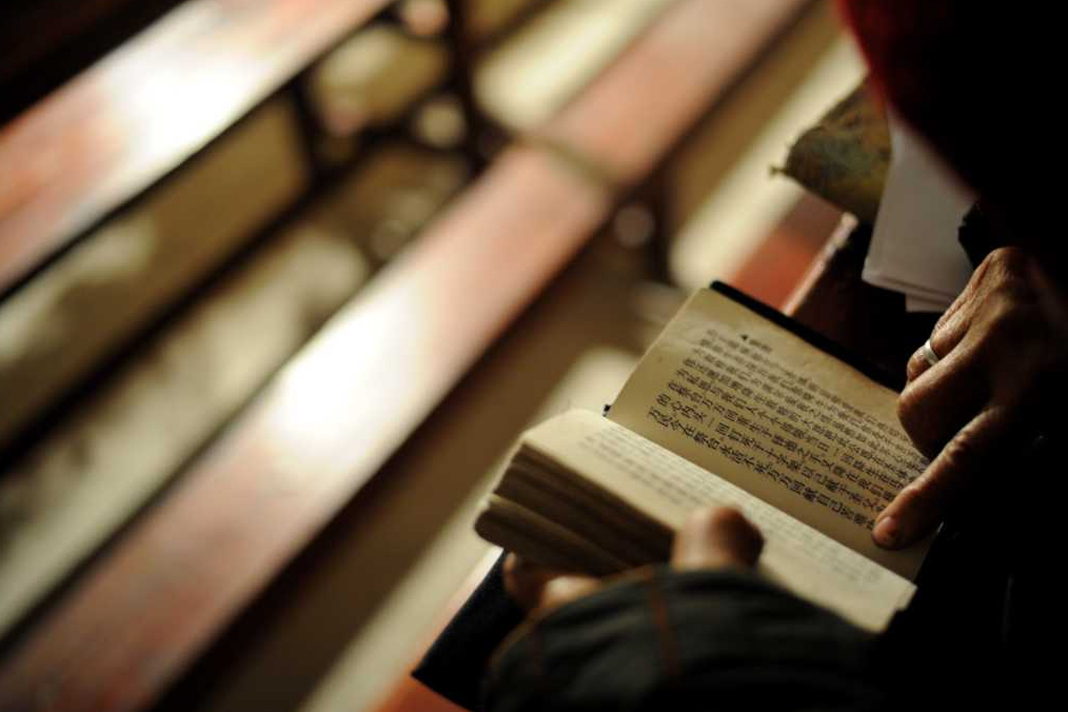
“>prefecture-level city of Fuzhou, searching for unlicensed religious materials. Claiming that anything that is not approved by the state is “pirated,” officers confiscated several boxes of Bibles, hymn books, and other religious literature found in the church. They also noted down the ID information of all congregation members who were present and threatened to arrest them if they meet again. Government personnel paid regular visits to the church afterward, to ensure that the church has not resumed assemblies.
Similar raids are implemented all over the country. Since last year, governments of localities throughout China have been chasing for religious publications as part of the nationwide campaign “to eradicate pornography and illegal publications.” A document issued in 2019 by the Ethnic and Religious Affairs Bureau of a county in Hebei Province calls for daily inspections to look for un-approved religious publications as “primary work on religion.” All such materials should be confiscated immediately.
A confidential document issued last April by a local government in Inner Mongolia demands various government departments to investigate religious venues, training institutions, printing companies, typing and copying shops, dining and entertainment establishments for unauthorized religious publications. The document also encourages grid administrators and the masses to report any leads on such materials.
State-sanctioned churches are not exempt from such investigations. On December 20, about ten officials from the Lichuan county’s United Front Work Department
(UFWD 統戰部). An intelligence agency established by the CCP authorities, it is used to gather information about and manage relations with democratic parties, intellectuals, dissenters, academics, religious and ethnic groups, and other individuals of influence, like business people, that are not directly associated with the Party inside China and abroad. Its main aim is to eliminate anti-communist forces or incite anyone outside the Party to support the CCP and its government. UFWD supervises nine internal bureaus, and among them, the second bureau is responsible for dealing with religious affairs; the seventh is in charge of Tibet-related matters, and the ninth deals with Xinjiang. UFWD also administers the five officially-sanctioned religious organizations.
“>United Front Work Department and police officers raided a Three-Self Church
See Three Self Church.
“>Three-Self church to look for “pirated Bibles.” A preacher there told them that all the Bibles had been printed by the Amity Printing Company in Nanjing, the capital of Jiangsu Province, which is approved by the Two National Christian Councils(基督教全國兩會). The China Christian Council (CCC) and the Three-Self Patriotic Movement (TSPM), both Protestant, are collectively referred to as the “two National Christian Councils” or the “two Chinese Christian Councils” (CCC/TSPM).
“>Two National Christian Councils
. Regardless, the officials confiscated 30 Bibles they found in the church.
A preacher from another Three-Self church in the county also reported that government employees warned him that any Bibles that are not approved by the Two National Christian Councils would be confiscated as “pirated publication.”
“If our Bibles are taken away, we have no more. We are thinking of asking our congregation members to hide them in the mountains,” the preacher told Bitter Winter.
A Seventh-day Adventist Church, affiliated with the Three-Self Patriotic Movementsee Three Self Church.
“>Three-Self Patriotic Movement
, in Lichuan was also ransacked last December, government personnel confiscating over 100 “pirated” Bibles. According to a church co-worker, believers don’t bring their Bibles to the church anymore, fearing the government might take them away. They read from the sacred text at home after each service, according to chapter numbers the preacher gives them during sermons.
Also in December, government personnel broke into the county’s Dongshan Church and confiscated more than a dozen Bibles and hymn books and replaced them with secular books, e.g., about farming or healthcare. Slogans promoting the Core Socialist Values(社會主義核心價值觀). Also phrased “Core Values of Socialism,” these 12 principles represent the “new interpretation of the Chinese socialism,” as promoted at the 18th National Congress of the CCP. The values are divided into three groups: national (prosperity, democracy, civility, and harmony); social (freedom, equality, justice, and the rule of law); individual (patriotism, dedication, integrity, and friendship). The CCP uses the values in propaganda to force “sinicization” of religions; their promotion is one of the “four requirements” imposed on religious communities. The new Regulation of Religious Affairs demands that religions should “implement core socialist values” (article 4, no. 2).
“>core socialist values
were posted on the walls.

Books on farming, healthcare, and other topics have replaced Bibles in the church.
According to a government source, the Lichuan county government has been hunting for “pirated Bibles” ever since they learned that some churches in the area had been in contact with places of worship in Wenzhou, a Prefecture(地區). Once the main unit of the Prefectural Level in the administrative division of China, the prefecture has now been largely replaced by the prefecture-level city. Only seven prefectures survive in Heilongjiang, Tibet, and Xinjiang.
“>prefecture
-level city in the eastern Province(省). A part of the administrative division of China at the highest, provincial level. China includes 22 provinces (although sometimes the government mentions 23, by adding Taiwan).
“>province
of Zhejiang, which, in turn, are associated with churches in Hong Kong with connections to the United States. The authorities fear that religious books may have been smuggled from abroad.
Some printing companies in Zhejiang’s prefecture-level city of Quzhou received a notice from the local Bureau of Culture, demanding “to ban the printing of religion-related books and materials with no exception.” Any printers found to have produced religious books without the government’s approval will be fined, shut down, have its business license revoked, or may even be sentenced to prison, the notice warned.
As per a Three-Self church preacher from Quzhou, the local Religious Affairs Bureau has threatened to impose fines, ranging from 3,000 to 10,000 RMB (about $ 430-1,400), on churches which have in their possession non-official religious books.
Click here to KEEP UPDATED on the latest news by subscribing to our FREE weekly newsletter.
Date published: 01/03/2020
DISCLAIMER
JOY! News is a Christian news portal that shares pre-published articles by writers around the world. Each article is sourced and linked to the origin, and each article is credited with the author’s name. Although we do publish many articles that have been written in-house by JOY! journalists, we do not exclusively create our own content. Any views or opinions presented on this website are solely those of the author and do not necessarily represent those of the company.