Written by: Tobias Lehner
Article source: www.churchinneed.org
Libya has been at war for almost nine years, with a government pitted against militias, all sides supported by foreign powers. Bishop George Bugeja, OFM, apostolic vicar of the Diocese of Tripoli, the country’s capital city, spoke with Aid to the Church in Need about the situation of the small Christian community in Libya.
The Berlin Conference in mid-January was meant to bring an end to the civil war in Libya. How do you rate the results?
The Conference was a very positive step in a long process to help Libya reach a situation in which peace and reconciliation can finally be achieved. It will not be an easy process; there are profound divisions and the parties in conflict are far apart, even finding it difficult to be at the same table to discuss the situation itself. Surely the various countries that took part in the conference have to continue doing their part in this long process, in talking with one voice and putting in practice what has been agreed upon at the conference.
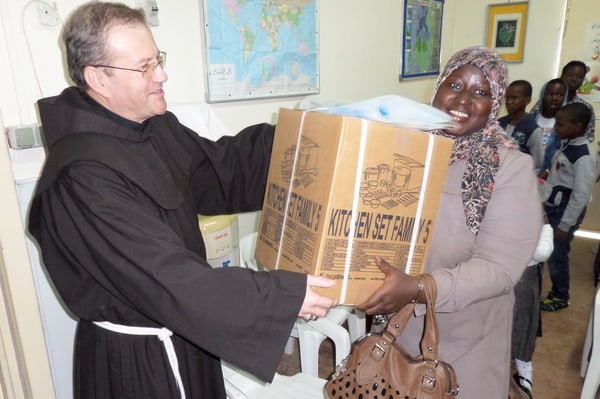
Bishop Buceja
The ceasefire to which the warring parties agreed lasted less than a week. The arms embargo is also said to have been broken again. What is the current situation in Tripoli?
Unfortunately, there has been some fighting since the ceasefire agreement. Fighting creates tension. Tripoli airport opens and closes according to the situation on the ground, but schools, shops and offices are open at least in the central part of the city.
Libya has been at war since the Arab spring began in 2011. Can the continuing wave of refugees to Europe be stopped?
The problem of the refugees is not about Libya itself. Libya is a springboard to enter to Europe. Refugees coming from Sub-Saharan countries are escaping from the problems they have in their own countries and trying to find a better future for themselves and their families. So, to stop or diminish the wave of refugees from trying to enter Europe, one has to help the countries that people are leaving and find solutions for the problems there. Otherwise refugees will continue to travel to Europe and continue to risk their lives.
Libya’s Christians are a small minority of just a few thousand believers. What are you doing, socially and politically, to improve their situation?
Politics are not in our way of working. We are the pastoral ministers of the Catholic Church. We do our best, within our limitations, to help people, first of all with our presence. I must say that the Catholic Church has stayed in Libya throughout the years of conflict—even when all others Churches and all European embassies left the country. Our presence with our flock has been and continues to be a sign of encouragement for all those who look to the Church. We also have a small Caritas center, where we give help to those in need, including medical attention thanks to the services of a doctor and nurses.
Click here to KEEP UPDATED on the latest news by subscribing to our FREE weekly newsletter.
Date published: 23/02/2020
Feature image: A Coptic Christian holds a lit candle in remembrance of the Egyptians beheaded in Libya, in the West Bank city of Ramallah. Mohamad Torokman/Reuters
DISCLAIMER
JOY! News is a Christian news portal that shares pre-published articles by writers around the world. Each article is sourced and linked to the origin, and each article is credited with the author’s name. Although we do publish many articles that have been written in-house by JOY! journalists, we do not exclusively create our own content. Any views or opinions presented on this website are solely those of the author and do not necessarily represent those of the company.