Written by: Alex Pollock
Article source: www.incontextinternational.org
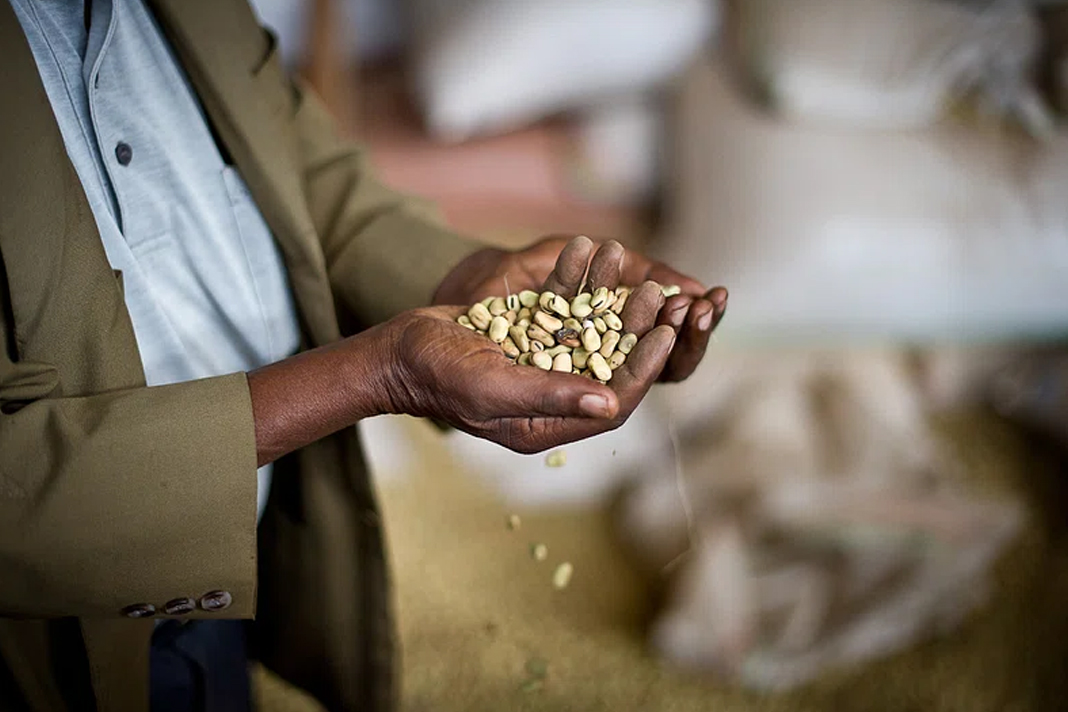
On 21 June, it was reported that over 7,000 metric tonnes (15 million pounds) of wheat, meant to assist the millions suffering from hunger stemming from ongoing conflict, had been stolen and/or mishandled by Ethiopian authorities in Tigray. The preliminary report, released by Tigray’s regional authorities, detailed the corruption and mismanagement of humanitarian aid given by the United States, the United Nations, and other humanitarian organisations.
In March, it was discovered that food aid capable of feeding 134,000 people for a month was being sold in markets and stored in flour mills, the packets still marked with the US flag. This mismanagement caused the United States and the United Nations to halt humanitarian deliveries to Ethiopia until reforms are made. US aid officials said this is potentially the largest scale of aid diversion reported in any country. More than 20 million people in Ethiopia (including a large refugee population) are dependent on food aid.
This disruption has already led to several reports of people dying of starvation. The US government and the UN announced the earliest aid could be restored to Tigray is July, while restrictions will remain in other parts of the country until changes are enacted. USAID (United States Agency for International Development) officials say that a degree of governmental corruption is expected when it comes to humanitarian aid delivery, however, the level to which it has grown is unprecedented. Ethiopia is not the only country dealing with aid-related corruption, as oftentimes the politicisation of aid in turn leads to governments manipulating the conditions of humanitarian assistance and its delivery.
In Nagorno-Karabakh, a disputed territory between Armenia and Azerbaijan, renewed tensions are credited partly to the disruption of aid convoys by the Azeri government. In Afghanistan, international sanctions on the Taliban government are prohibiting aid from being delivered to millions of people in need. The same can be said for Syria, which is still struggling with aid delivery after the deadly earthquake earlier this year. The use of humanitarian aid as a political tool to bend governments to certain standards is negatively affecting the local populations, and usually more so than the governments the restrictions are intended for. Along with this, the amount of theft and corruption within the aid sector demonstrates the struggles caused by living in a fallen world.
While the poor and the needy will always be among us (Matthew 26:11), the brokenness of the current system allows for Christiansin decision-making positions to initiate discussions about the importance of caring for those in need with honesty and integrity. Proper ethics and caring for the needy are values that many religions adhere to, allowing believers to initiate ‘bridge-building’ conversations with people of other faiths.
Many faith-based NGOs are Christian organisations further allowing the Church access to countries with little overt Christian presence, such as Afghanistan. The Christian aid sector is thus in the position, and should carry the conviction, to operate within biblical principles when considering how to conduct humanitarian operations. Leading by example and displaying the character of Christ through action can be an effective evangelism tool within closed countries where open evangelism is not possible.
Following the words found in Matthew 25 and John 13, “when I was hungry and you gave me something to eat, I was thirsty and you gave me something to drink…truly I tell you whatever you did for the least of these brothers and sisters of mine, you did for me,” and “by this everyone will know that you are my disciples, if you love one another,” the Church can pray that those in need will receive the aid that they need, and along with it, will experience the love and salvation found in Jesus.
Please join us in praying for the following:
● For the Lord to work in the hearts of government officials that they deal with their people righteously, and with wisdom and integrity
● For humanitarian aid to be delivered to those who need it in a timely and efficient manner
● For the Church to be a bridge between governments, humanitarian organisations, and suffering populations and for people to experience the love of Christ through humanitarian initiatives
Click here to KEEP UPDATED on the latest news by subscribing to our FREE weekly newsletter.
Date published: 21/07/2023
Feature image: Image for illustrative purposes only. Artwork from www.rawpixel.com
DISCLAIMER
JOY! News is a Christian news portal that shares pre-published articles by writers around the world. Each article is sourced and linked to the origin, and each article is credited with the author’s name. Although we do publish many articles that have been written in-house by JOY! journalists, we do not exclusively create our own content. Any views or opinions presented on this website are solely those of the author and do not necessarily represent those of the company.