


Compiled by: Anjoné de Jager
Article source: JOY! Magazine
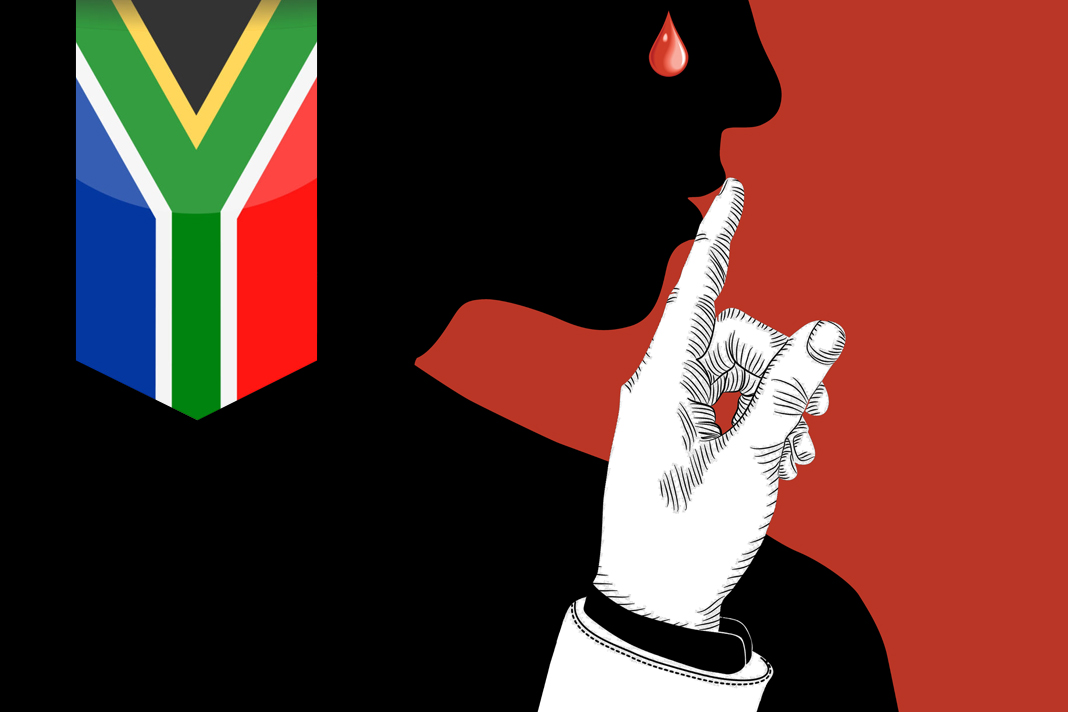
South Africa stands at a critical crossroads, facing a legal challenge that could decriminalise prostitution, impacting the moral foundation of our society. This is not simply a legal matter: It is a fight to uphold the dignity of every person, protect the sanctity of marriage, and shield the vulnerable from exploitation. Legalising prostitution opens the door to greater exploitation, human trafficking, and the destruction of families. Prostitution is more than just a physical act; it brings devastating spiritual, emotional, and societal consequences. The Bible is clear – we must flee from sexual immorality (1 Cor 6:18) and warns that a society that embraces it will be filled with wickedness (Lev 19:29), leading to moral decay and harm that ripples through the entire community.
In this issue, we’ve sought commentary from Errol Naidoo, president of Family Policy Institute, as well as from Cause for Justice (CFJ) to help us understand the legal and moral implications of this pressing issue. As Christians, we must stand firm, defend what is right, and speak the truth in a world that desperately needs it.
The legal and moral battle: Upholding South Africa’s ban on prostitution
—by Cause For Justice
The state of current South African law is that to receive payment for a sexual encounter with another who is not one’s spouse, is a crime. So too, is paying someone (a prostituted person or a third party) in order to engage in a sexual encounter with a prostituted person.
The role of the SA Law Reform Commission (SALRC)
In a matter like this, it is reasonable to expect that the state would defend a law made by Parliament as direct representative of the South African electorate. The Constitutional Court previously upheld the legislation in S v. Jordan (2002) and the SALRC, after a wide-ranging and intensive seven-year project, recommended in a 2015 report released by government in 2017 that the current total criminal ban on prostitution should be retained and further steps be taken to assist prostituted persons to divert out of the “commercial sex trade”.
Government withdrawal and CFJ’s stance
Despite initially noting their opposition, CFJ learnt at the end of 2024 that the South African government had withdrawn its defence, leaving the case completely unopposed. CFJ seeks to uphold the legislation and accordingly applied to join the case to represent the public interest in retaining the criminal ban on prostitution.
CFJ’s stance is based on the fundamental dignity of each human person, endowed with inherent worth and incalculable value. Prostitution involves the commodification of the human body, reducing human beings to commercial sex objects and commodities for the sexual gratification of predatory individuals. It violates their personhood and equal dignity as members of the human family.
The global impact of prostitution
Research and first-hand accounts of the practice and system of prostitution from around the globe show that prostitution is inherently exploitative, violent, and abusive, and is associated with an array of destructive and harmful consequences for the individuals involved in it, their families, surrounding communities, and the rest of society. Prostitution is an irredeemable vice.
Next steps in legal process
Once the court has determined which parties will be allowed to participate in the case – which is expected by October – the matter will proceed on the merits in accordance with a court-directed timeline for the exchange of pleadings, expert witness statements, and other compulsory and incidental court processes. The court hearing of the merits of the case is expected to take place during the first semester of 2026.
What Christians need to understand
—by Errol Naidoo
The most important fact about the agenda to legalise the entire sex industry in South Africa is that it is influenced by UN agencies like the WHO, UNESCO, and others. The Department of Justice commissioned the SA Law Reform Commission (SALRC) to conduct an investigation on prostitution law reform to bring the Sexual Offences Act in line with the Constitution.
SALRC’s investigation and findings
The SALRC’s comprehensive nine-year investigation concluded that legalised prostitution would be the worst policy for South Africa because of the high rates of poverty, unemployment, and sexual exploitation of women. The Department of Justice, who commissioned the investigation, rejected the findings of the SALRC study because it conflicted with its sexual rights ideology.
The ANC’s push and setback
In 2022, the ANC introduced the “Sexual Offenses Amendment Bill” that repealed the existing laws that criminalise the sale and purchase of sexual services – thereby legalising the entire sex industry. Pimps, brothel owners, and crime syndicates would have become legitimate businesspeople. But the bill stalled because state law advisors warned it would not pass constitutional scrutiny.
SWEAT’s high court challenge
Following this setback, the foreign-funded pro-prostitution group, the “Sex Workers Education and Advocacy Taskforce” (SWEAT) lodged a High Court application to repeal the laws that criminalise the sale and purchase of sexual services. If successful, SWEAT’s application will achieve what the ANC’s bill failed to accomplish. The ANC government declined to oppose SWEAT’s High Court challenge to its own laws. But several NGOs have.
Why is this not just a legal issue, but a moral and spiritual battle for the soul of our nation?
Research proves that legalisation expands the sex industry and traps vulnerable women (and children) in sex slavery. Activists argue this is a matter of equality and human rights. However, legalised prostitution is a gift to pimps, brothel owners, and crime syndicates. It never benefits the women. Child prostitution increases when adult prostitution is legalised.
Legalised prostitution does not regulate the sex industry. In fact, research from countries that have legalised, reveal an illegal sex trade often exists alongside the legal industry. Legalised prostitution significantly harms marriage and the family. It fuels adultery by normalising sex buying. Legalisation does not remove the negative stigma of prostitution.

What can ordinary believers, churches, and families do to oppose the bill and make their voices heard?
The “Sexual Offenses Amendment Bill” stalled in Parliament. The ANC does not have the majority to pass the Bill on its own. They are banking on SWEAT’s High Court application to achieve what the bill failed to do – legalise the entire sex industry – but by judicial decree.
Christian citizens must pray that SWEAT’s application will fail in the High Court. Pray for the lawyers opposing this application. And financially support the groups opposing it. Christian citizens must make their voices heard through the news media and by articulating well-reasoned arguments against legalised prostitution on social media.

This article is featured in the September issue of JOY! Magazine. Read a digital version of this magazine here: joygifts.co.za
Click here to KEEP UPDATED on the latest news by subscribing to our FREE weekly newsletter.
> Please support Christian media and journalism in South Africa. Help us to spread the Word of God and take a stand for the truth by making a donation to our ministry. We appreciate your support. Click here to take hands with JOY! Magazine.
Date published: 18/09/2025
Feature image: Image for illustrative purposes only. Artwork adapted from www.freepik.com
DISCLAIMER
JOY! News is a Christian news portal that shares pre-published articles by writers around the world. Each article is sourced and linked to the origin, and each article is credited with the author’s name. Although we do publish many articles that have been written in-house by JOY! journalists, we do not exclusively create our own content. Any views or opinions presented on this website are solely those of the author and do not necessarily represent those of the company.




Please do not allow this! It is degrading and destroying women’s lives.