Written by: INcontext International
Article source: www.incontextinternational.org
On Thursday 25 August, the Hungarian Atomic Energy Authority issued a permit for Russian state-owned company Rosatom to begin constructing two new nuclear reactors to expand Hungary’s existing Paks II nuclear plant. This project, intended to be completed by 2030, is expected to double the power station’s capacity, which is currently generating around 40% of Hungary’s electricity supply.
The Russian ally considers the deal a “turnkey” project in improving Hungary’s energy sovereignty and bringing European countries closer to achieving climate goals. Finland was working towards a similar Russian nuclear power plant project but cancelled it in May over Russia’s invasion of Ukraine. On Saturday 27 August, both Russia’s Defence Ministry and Ukraine’s nuclear operator Energoatom issued statements that the Russian-held Zaporizhzhia nuclear power plant in Ukraine had been repeatedly shelled. Both sides blame each other for the strikes, which come only days after the power plant was reconnected to Ukraine’s electricity grid.
Due to global concerns about the safety and security of the biggest nuclear facility in Europe, International Atomic Energy Agency chief Rafael Grossi confirmed on 29 August that he will be leading a team of experts to inspect the site later this week.
The other main use of nuclear energy is to develop lethal weaponry. While some countries seek to develop weapons, some countries have taken a strong stance against nuclear weapon proliferation. Kazakhstan has been a leader in making Central Asia a nuclear-weapon-free zone. 29 August marked the ‘International Day against Nuclear Tests’, commemorating the day when the first post-Soviet Union president of Kazakhstan, Nursultan Nazarbayev, signed a decree closing the Semipalatinsk Test Site, which was the first and largest nuclear test site established by the former Soviet Union on its territory and exposed over 1.3 million people to radioactive fallout.
FROM A CHRISTIAN PERSPECTIVE
 | ENERGY ±440 POWER REACTORS WORLDWIDE 10% OF WORLD’S ELECTRICITY SUPPLY |  | MILITARY 9 COUNTRIES (CAN) HAVE NUCLEAR WEAPONS ±12,705 WARHEADS WORLDWIDE (Jan 2022) |
Nuclear power is a resource that can be used for good and bad purposes, and even the positive uses involve complex considerations. For example, many governments have been grappling with the question of the disposal of nuclear waste, which remains highly radioactive for a very long time. According to Professor Neil Hyatt, chief scientific adviser to the UK’s Nuclear Waste Services, it takes around 1,000 years for 90% of original radioactivity to decay, and over 100,000 years for the remaining 10% to slowly decay.
As a military weapon, nuclear weapons are widely considered for defensive purposes rather than aggressive ones, as the ultimate deterrence from any attack. It is one of the main reasons the Cold War never developed into a ‘hot’ war in the past, and it continues to contribute towards peace between nuclear armed countries in order to avoid a mutually destructive nuclear war. Countries feeling threatened and wanting to ensure national security, such as Iran and North Korea, thus seek to develop such a form of deterrence.
Even if the primary motivation is protection, it is still informed by the logic of mistrust and arming oneself better than other countries rather than a logic grounded on peace and trust. Harnessing nuclear energy and developing policies around military and civilian use in a God-honouring way requires great wisdom. While the global Church can pray for protection against abuse or misuse of such a powerful resource, we know that our security lies in our hope in Christ. “It is better to take refuge in the Lord than to trust in humans. It is better to take refuge in the Lord than to trust in princes” (Ps 118: 8-9).
Please pray with us for the following:
- For a thorough assessment of the Zaporizhzhia power plant and the prevention of any risks associated with the alleged strikes
- For wisdom for world leaders to steward nuclear resources in a godly way, and for people of peace to influence strategic decision-making
- For believers to find their security in Christ’s sacrifice for us and God’s sovereignty over everything
Click here to KEEP UPDATED on the latest news by subscribing to our FREE weekly newsletter.
Date published: 12/09/2022
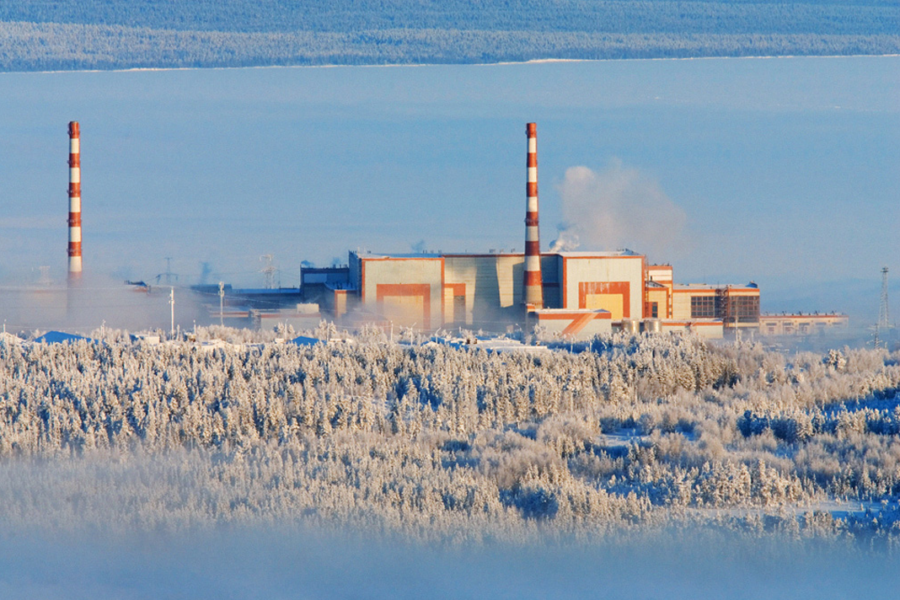
Feature image: Image for illustrative purposes only. The Kola nuclear power plant, Polyarnye Zori. commons.wikimedia.org
DISCLAIMER
JOY! News is a Christian news portal that shares pre-published articles by writers around the world. Each article is sourced and linked to the origin, and each article is credited with the author’s name. Although we do publish many articles that have been written in-house by JOY! journalists, we do not exclusively create our own content. Any views or opinions presented on this website are solely those of the author and do not necessarily represent those of the company.