Written by: Philip Rosenthal
Article Source: ChristianView Network
Summary
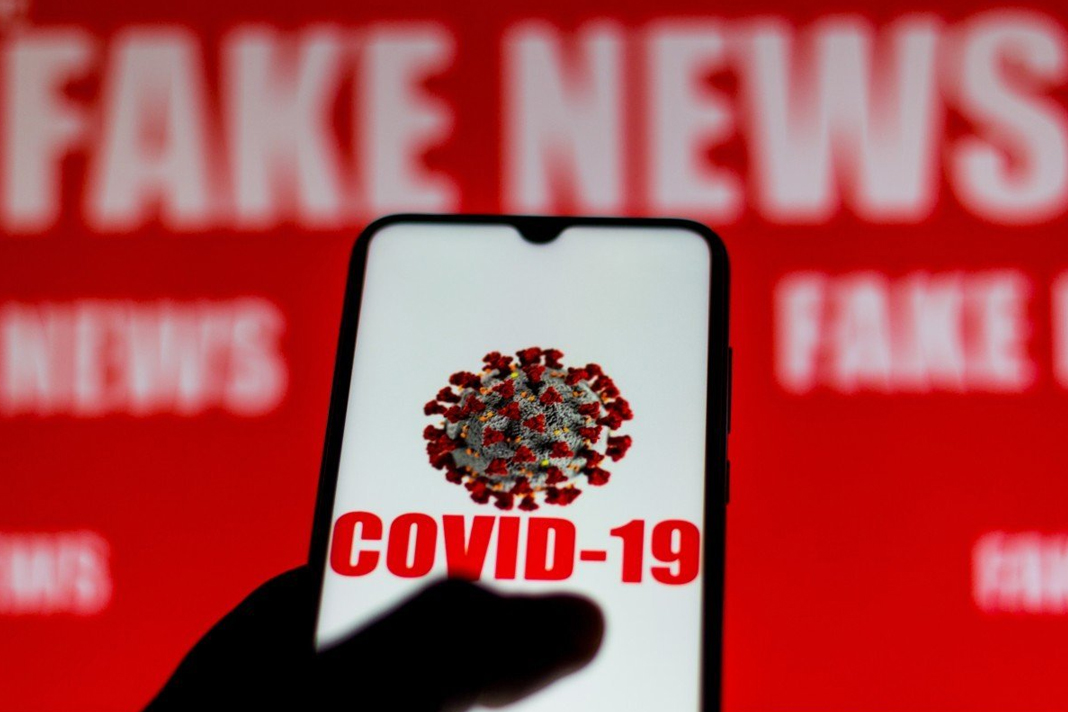
The urgency of the Coronavirus has caused faster and wider spread of fake news than any time in the history of the world. This can cause serious harm, and may be a criminal offence. Tools to spot fake news include checking: authors identity; authors competence; sources & assumptions; deviation from mainstream requires more evidence; authority & reliability of publication; bias, agendas & lenses; qualifications & limitations by author; deletion/withdrawal; opposing views; tone; feedback & correction; types of error; pattern of conspiracy theories; reliability of author; the difficulty of mixed news. While we don’t have time to apply all these tests every time, we must apply more careful tests to greater controversy and on a broader platform.
Biblical Context
People tend to react to calamities with rumours (Ezekiel 7:26; Jeremiah 51:46; Matthew 24:6), and the uncertainty of information can exacerbate the crisis.

Why Fake News Is A Big Problem With Corona
Never in the history of the human race, has there been so much fake news spreading so far, so fast – the main reason being the urgency and worldwide unity in fighting the threat of the COVID19 in the context of social media. Intelligent people click share, forward before doing anything to check whether its true or not. It’s always been a frustration of mine that somehow Christian fake news usually got shared more enthusiastically than the real threats I was trying to mobilise people on.
Generation of false medical information on CoronaVirus is a criminal offence in terms of the new Coronavirus regulations – there have already been arrests in South Africa. That itself poses serious questions of interpretation and how to balance free speech. A basic caution is be careful about writing an article summarising what you don’t understand.
Fake news hurts by: Creating noise drowning out real news; Damaging peoples reputations; Focusing on false medical advice instead of real; Creating division; In some cases inciting violence. So how do we tell if its true? A list of 15 tests in a fact checking toolbox you can use below.
The Degree Of Checking
Reality is we usually don’t have the time to apply all 15 tests every time.
So we have to introduce a degree of fact-checking according to:
- The possible impact of the information.
- The size and influence of our audience and our own credibility to them.
- How much the new information deviates from the mainstream.
- The controversy it generates
- The urgency of getting the information out (And here is the problem with Corona virus. Because the urgency is high, many just click, forward share what they normally wouldn’t if they think it might help someone. But not stop to think wrong information can hurt).
Fact Checking Toolbox
1. Author
Who wrote it?
– If there is no name and its just ‘from a doctor in Wuhan’ or ‘a nurse’, then its probably just made up nonsense.
– The fact some respected person forwarded it to you doesn’t make it true.
– Now if there is an actual name, are you sure that person actually wrote it? Attributing things to celebrities is a cheap way to get social media shares.
– Whatsapp is the absolute worst for forwarding without showing the source. After that email. A facebook post you can at least check if the person says they are for example an Italian doctor, if their profile matches that description.
2. Authors Competence
What is the competence of the person who wrote it?
– Is this person writing in their area of expertise? For example, listen to a statistician in statistics and a medical doctor in medicine but not vice versa.
– If you see an internet meme credited to ‘the University of XYZ’, then is there a link to that universities web site? Or do a search for it. Otherwise can be false.
3. Sources & Assumptions
Have they referenced their sources and assumptions? Where did they get their information from? E.g. If someone makes a prediction on the course of the epidemic, then what info did they use to do their calculations? Do a rough check if you understand the maths.
4. Deviation From Mainstream Requires More Evidence
Extraordinary claims require extraordinary evidence. Start with what you confidently know already before you read the article. If someone is saying something radically different, then the onus of proof is on them. If it sounds too good to be true, it probably isn’t.
5. Authority & Reliability Of Publication Where Was It Published?
Different publications have different standards of fact checking.
Top level:
– Peer reviewed journal;
– Authority organisation in field
– Serious news outlet
– Tabloid press
– Unqualified user generated blog post.
– Social media post by unqualified person.
If you are forwarded something without a source link, then cut and paste some text into your search engine and it should turn up where it was originally published.
6. Bias, Agendas And Lenses:
Within the above list of publications, realise they have biases. Is that bias likely to affect what they are saying:
– Socialists are going to support more state control
– Libertarians are likely to oppose state control and downplay threats motivating it
– Partisan news wants their favourite politician to look good and their enemy to look bad
– Race-ultras are going to put a racial spin on things
– Investment companies and CEOs don’t want the economy to go down – they want to keep you positive.
– Political leaders want to discourage panic, encourage compliance and create hope. These people aren’t necessarily deliberately lying. They just have preconceived ideas and want to tell you selective facts that fit their biased agenda.
7. Qualifications & Limitations By Author
What qualifications and limitations does the writer say about his information? Does he say it is a rough estimate, speculation, does he admit he is out of his field.
8. Deletion:
Is this a deleted post preserved on archive dot org – if so, be suspicious. There was likely a reason it was deleted.
9. Other Sources:
Can you find the same information somewhere else from a credible source? Try do a quick search for keywords. If its only found in low credibility sources, forget it.
10. The Other Side
Can you find an opposing viewpoint? Are their arguments better or do they hold up to scrutiny? A quick trick is to paste in keywords from a headline and then add ‘hoax’or ‘fake’ or ‘rebut’and see what comes up.
11. Tone:
Is the tone of the writing serious, alarmist, angry or its it casual?
12. Ask Someone Who Knows More:
Before sharing or forwarding it to everyone you know, maybe consult someone with more expertise in that area – or doing a search to find comment from such a person.
– Lets say you find an article in a peer reviewed scientific paper and want to summarise it. A good precaution is to ask someone with competence to check your summary.
13. Feedback & Correction
If you do share something. Check the response comments. If one of your friends flags it as possible fake news, then switch the privacy of the post to ‘only me’ and do some more fact checking. Friends can often spot errors you don’t or improve the accuracy of the article. If after checking you are convinced its still good, then put it public again, but if not, delete.
– If it was actually medically risky/false info, then post a correction or send to those who you sent the original forward to. This is an ethical issue. If you unwittingly spread false information, you have a responsibility to correct it.
14. Types Of Error
Be aware of categories of error, which are not all the same:
-Inaccurate summarisation. Of all summarisation, headlines are the shortest summary, the most widely read. Does the headline match the facts in the article.
– Bias
– Lies
– Out of area of expertise
– Out of date information superseded by new – E.g. World Health Organisation discourages paper mask wearing and a few days later encourages cloth mask wearing.
– Mixture of correct & incorrect
15. Pattern Of Conspiracy Theories
Know the basic formulas of a conspiracy theory meme:
Example: [Celebrity name] + [Threat/Opportunity] + [Secrecy reasons why nobody else believes] + [Power]
– If you spot some components of this meme, be careful before you click.
16. Reliability Of Author
Have these people deceived before? E.g. the Chinese government denies their human rights abuses and past failures such as starvation of their own people during the ‘Great leap forward’. Are we going to believe their claims of no more Coronavirus infections or deaths?
17. The Difficulty Of Mixed News
A more difficult form of fake news is when a person of credibility such as a doctor or pastor integrates some fake news he has read into a new message mixing it with true facts. If one hears one new fact that is radically different from the consensus, then do a search on it. If you can’t find a reputable source for it, its probably false. Then look see if you can trace the fake source using keywords.
– One then has to be careful of dismissing it all as fake news just because a part is proved wrong. Realistically, nobody is going to score 100% – including you and me. But if you build a good framework of credibility in your mind for sources of information and facts then you have a better ability to fit new information into that framework.
And please SHARE this. Its not half as exciting as the fake news on CoronaVirus’ but this boring stuff is going to help your friends filter the rubbish out of their news feeds, and who knows, maybe save someone’s life.
Click here to KEEP UPDATED on the latest news by subscribing to our FREE weekly newsletter.
Date published: 22/04/2020
DISCLAIMER
JOY! News is a Christian news portal that shares pre-published articles by writers around the world. Each article is sourced and linked to the origin, and each article is credited with the author’s name. Although we do publish many articles that have been written in-house by JOY! journalists, we do not exclusively create our own content. Any views or opinions presented on this website are solely those of the author and do not necessarily represent those of the company.