



Written by Philippe de Beer; Parklane Properties
Article originally published in the November issue of JOY! Magazine
We’re continuing our series on Spirit-led financial wisdom for the season we are in. The first two articles made the case that the world is moving through converging instability, speculative assets carry risks most families cannot comfortably absorb, and well-chosen property in stable markets has a track record no other asset class can honestly match. Most readers who have followed this far are asking the natural next question, the practical one: what does this actually look like for my family? That is exactly the right question. And it deserves a straight answer.
Think beyond your borders
For South African families, the most important investment decision of the next few years may not be which property to buy. It may be where. A rand-denominated property in a rand-denominated economy, funded by a rand-denominated income, concentrates all exposure in one currency, one political environment, one set of economic conditions. For those with the means and the appetite, moving a portion of capital offshore – into hard currencies, in stable jurisdictions – adds a layer of protection that has proven its value through South Africa’s volatility of the past decade.
For those who will remain in South Africa and invest locally, the same principles apply: choose wisely, diversify across property types – residential, holiday rental, commercial – buy in genuine demand locations, manage debt carefully, and let your properties generate income that compounds over time. Well-chosen South African property in the right locations has shown consistent appreciation and remains a sound foundation for long-term wealth. The geography differs. The wisdom is the same.
Why Mauritius has become a natural choice
In 2002, Mauritius made a deliberate and far-sighted decision: to open a portion of its property market to foreign investors through the launch of the Integrated Resort Scheme – the first of what would become a series of dedicated acquisition frameworks developed progressively over the following two decades. The Real Estate Scheme followed in 2005, the Property Development Scheme in 2015, G+2 apartment residences in 2016, with IHS and Smart City schemes completing the picture – each designed to serve different buyer profiles, and each structured separately from the local Mauritian property market to protect values for Mauritian citizens. Within those schemes, property values have appreciated consistently – steadily and measurably, year after year, through every global cycle that tested other markets.
The appeal to serious investors is clear: Mauritius is a recognised low-tax jurisdiction for those considering fiscal expatriation, with no wealth tax and no property taxes – no rates or municipal charges of the kind South African families are accustomed to paying. An active Double Taxation Avoidance Agreement with South Africa ensures income is not taxed twice. For qualifying property investments above $375 000, permanent residency is gained – valid for the duration of property ownership, family included. In well-managed properties, supported by the island’s strong and consistently resilient tourism industry, rental yields of 4 to 6 percent net annually in hard currency are achievable. That income continues regardless of what the rand does.
What the process actually involves
Acquiring property in Mauritius as a foreign national is well-regulated and straightforward. Transactions are governed by the Mauritian Civil Code, providing strong, codified protection for buyers. A notary oversees the transfer process. The Economic Development Board manages the residency application linked to qualifying acquisitions. Purchase costs, timelines, and legal requirements are clear and predictable. For South African buyers, exchange control regulations allow for offshore property investment within the annual foreign capital allowance. Your South African financial advisor and a Mauritius-based property specialist work in parallel to ensure the transaction is correctly structured from both sides. The process is manageable – it simply requires the right guidance from people who know both markets well.
Wisdom before speed
James 1:5 does not promise a formula. It promises a generous God who gives wisdom to those who genuinely ask. That wisdom may lead you towards a Mauritius acquisition, towards a different market entirely, or towards waiting for a season that has not yet arrived. Every family’s situation is different – their capital, their timeline, their calling, and their sense of what this particular season requires of them.
What the Spirit-led investor does not do is move from fear, or without proper counsel. The right transaction, properly structured, in the right location, for the right reasons, at the right time – that is what wisdom looks like in practice.
…In the next issue of JOY, I’ll bring this series to a close – reflecting on what it means, as Spirit-led Christians, to hold what we have been given with open hands, and why that posture, more than any strategy, is the foundation of lasting financial peace.

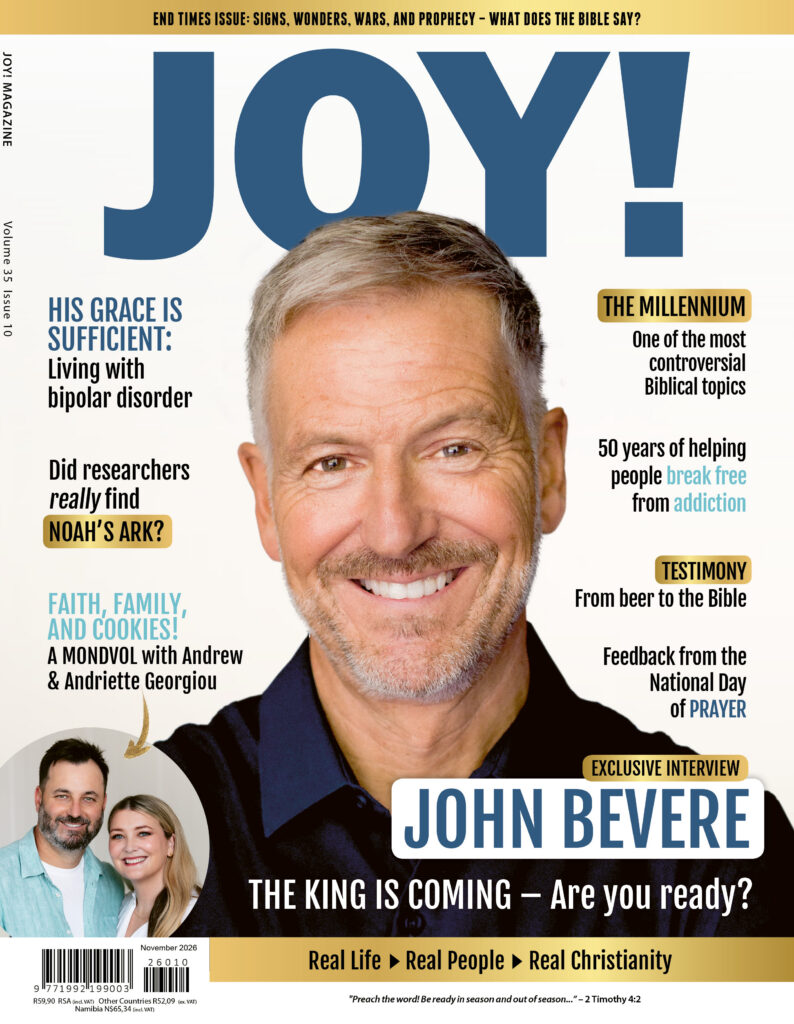
This article appears in the November 2026 issue of JOY! Magazine. Read the digital version of this magazine here: joygifts.co.za
Click here to KEEP UPDATED on the latest news by subscribing to our FREE weekly newsletter.
> Please support Christian media and journalism in South Africa. Help us to spread the Word of God and take a stand for the truth by making a donation to our ministry. We appreciate your support. Click here to take hands with JOY! Magazine.
Date published: 21/10/2026
Feature image: Sourced from article originally published in the November issue of JOY! Magazine
DISCLAIMER
JOY! News is a Christian news portal that shares pre-published articles by writers around the world. Each article is sourced and linked to the origin, and each article is credited with the author’s name. Although we do publish many articles that have been written in-house by JOY! journalists, we do not exclusively create our own content. Any views or opinions presented on this website are solely those of the author and do not necessarily represent those of the company.


