


Press statement by Bafana Modise; National Spokesperson; SAFI
The South African Friends of Israel (SAFI) has welcomed the return of a delegation of South African queens, princesses and princes from Israel, describing the visit as another significant step in the rapidly developing relationship between Israel and South Africa’s traditional leadership.
The visit comes at a time when formal relations between the South African and Israeli governments remain deeply strained, but relationships between ordinary South Africans, traditional communities and Israel continue to develop independently.
The 12-member royal delegation included Queen Sinokuhle Matiwane of the AmaMpondomise Kingdom, eight princesses and two princes representing several South African royal houses and traditional communities. Their visit follows King Buyelekhaya Dalindyebo of the AbaThembu Kingdom’s visit to Israel in December 2025, during which he met Israeli President Isaac Herzog and Foreign Minister Gideon Sa’ar, visited communities affected by the October 7 Hamas attacks and publicly expressed his support for Israel.
Israel has since continued its direct engagement with South African traditional leaders, recognising the important cultural, developmental and community leadership roles they play, particularly across rural South Africa. This latest delegation marked an important expansion of those relationships by placing particular emphasis on the role of women in traditional leadership and their ability to advance development within the communities they represent.
Her Royal Highness, Princess Bhelekazi Mabandla, stated firmly upon her return that: “I am unapologetic about my support of Israel, I am unafraid and I will not be bullied on this, not by the governing party of South Africa or anyone else, I stand with the Jewish people, I stand with Israel, and I pray for peace for the Israeli’s and Palestinians alike. The propaganda about Israel being an apartheid state is absolute rubbish. The purpose of my visit was to be an ambassador of peace and reconciliation, and to promote the fact that we have so much to learn from Israel. I want us to build a partnership between Africa and Israel, their advancements in water, medicine and technology could seriously benefit the people of our country.”
Rather than focusing only on political dialogue, the visit explored areas in which Israeli expertise can translate into practical benefits for South African communities, including water security, healthcare, agriculture, technology, entrepreneurship and women’s economic empowerment.
Water was of particular importance to members of the delegation. Princess Fundiswa Zote of the AbaThembu Kingdom highlighted the lack of reliable water access facing communities at home and the potential to work with Israeli-founded Innovation:Africa, which uses Israeli solar and water technologies to provide clean drinking water and electricity to underserved African communities.
“There’s no water in our communities and we’ve been speaking to Innovation:Africa to see how we can work together and collaborate and use some of the Israeli technology to bring water to our people,” Zote said during the visit.
The delegation was also exposed to Israeli advances in healthcare and emergency medicine, including the work of Magen David Adom and Hadassah Medical Center, alongside initiatives demonstrating how cooperation between Jewish and Arab Israelis is creating economic opportunities for women.
For SAFI, the significance of the visit extends far beyond the individual institutions visited. It demonstrates that the relationship between South Africa and Israel cannot be reduced to the diplomatic disagreements between their respective governments. Traditional leaders represent communities with their own priorities and challenges, including unemployment, inadequate infrastructure, water insecurity, healthcare access and rural economic development. Direct engagement gives those leaders an opportunity to assess for themselves whether Israeli expertise and partnerships can contribute towards solving those problems.
Princess Zote described the visit as an opportunity to build enduring friendship between the two peoples, concluding her time in Israel with the words: “May God bless the city of Jerusalem. May God keep her. May God bless Israel and keep Israel in perfect peace. We love you.”
National Spokesperson for SAFI, Bafana Modise, said the growing relationship demonstrates the importance of allowing South Africans to experience Israel beyond the political narratives through which the country is so often presented: “This is becoming something much bigger than a series of visits. We are seeing genuine relationships develop between Israel and traditional leaders who represent communities across South Africa. They are travelling to Israel, meeting Israelis themselves, seeing the country firsthand and identifying practical areas of cooperation that can improve people’s lives back home.”
“Whatever disagreements may exist between governments, they should not prevent South Africans from building relationships that can deliver clean water, better healthcare, agricultural knowledge, economic opportunities for women and new possibilities for rural communities. Our relationship with Israel should ultimately be measured not only in diplomatic statements, but in what cooperation can achieve for ordinary people.”
SAFI believes this growing engagement represents an important new chapter in relations between the people of South Africa and Israel, built around dialogue, mutual respect and practical cooperation rather than political division.
Click here to KEEP UPDATED on the latest news by subscribing to our FREE weekly newsletter.
> Please support Christian media and journalism in South Africa. Help us to spread the Word of God and take a stand for the truth by making a donation to our ministry. We appreciate your support. Click here to take hands with JOY! Magazine.
Date published: 18/09/2026
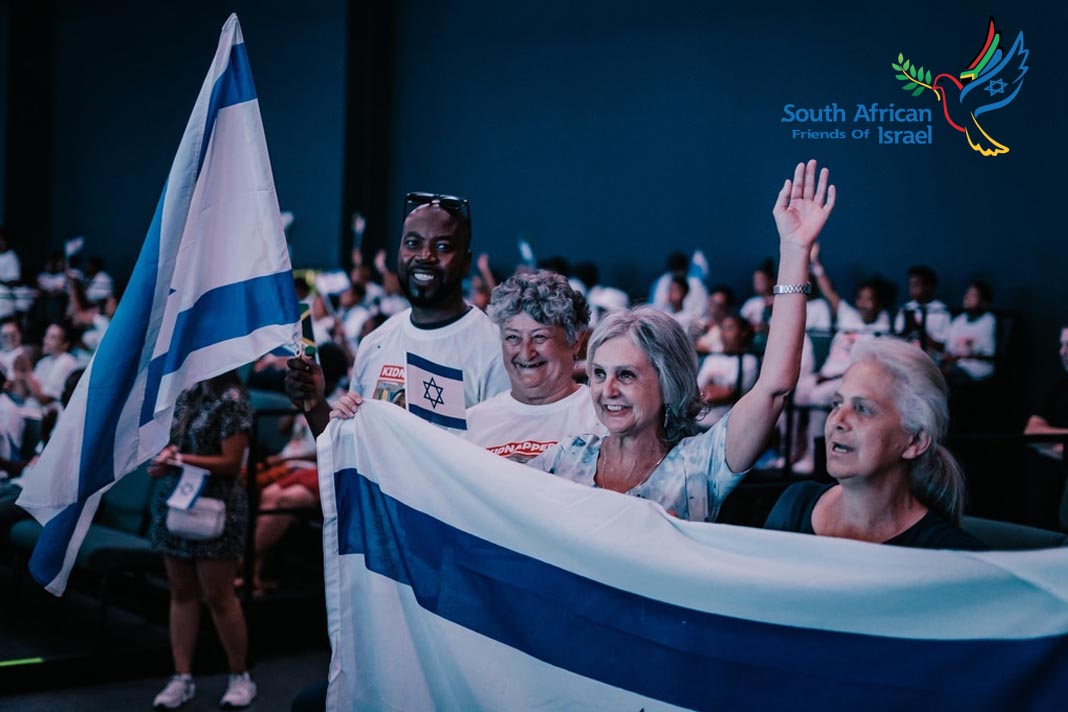
Feature image: Sourced from official SAFI website gallery
DISCLAIMER
JOY! News is a Christian news portal that shares pre-published articles by writers around the world. Each article is sourced and linked to the origin, and each article is credited with the author’s name. Although we do publish many articles that have been written in-house by JOY! journalists, we do not exclusively create our own content. Any views or opinions presented on this website are solely those of the author and do not necessarily represent those of the company.




 has welcomed the return of a delegation of South African queens, princesses and princes from...)